During my stay on Zamalek at the end of April I couldn't help but stop to admire these wonderful pieces of artwork illustrating the January 25th revolution in Egypt on Ismail Mohammed Street. The pieces have become somewhat of a model backdrop as people stop to have their photo taken. My personal favourite is the mummy saying, 'I'm Free!'
Sunday, 8 May 2011
Visit to Tanis 20.4.11
Tanis was chosen as the site for the northern capital of Egypt during the 21st Dynasty, and preserved the subterranean royal tombs of the 21st and 22nd Dynasties which contained fine burial equipment now housed in Cairo's Egyptian Museum. The site was initially excavated by Auguste Mariette and later by Flinders Petrie and Pierre Montet, and is currently being excavated by a French team.
Many of the blocks and statues used to create this new capital city were taken from the Delta capital of Ramesses II at Pi-Ramesses (Modern Qantir) in the northeast Delta and reused by the rulers of the 21st and 22nd Dynasty, who Shaw (see below) wittily described as being "children unleashed in a box of spare Lego bricks". Temples dedicated to Amun, Horus, Mut, Khonsu and Astarte have been identified at the site, together with an outer mudbrick enclosure wall dating to the reign of Psusennes I and a sacred lake.
| Reused architectural elements from Pi-Ramesses |
| Reused colossal statue of Ramesses II |
| Reused columns, now fallen |
It was fantastic to visit Tanis, not least to attempt a (futile) search for the Ark of the Covenant! I do highly recommend a visit if ever you are in the area, we were alone except for a small group of French tourists and the absence of loud noise was especially memorable, at least until the noon Muezzin calls!
Dr. Garry Shaw has recently published an entertaining account of his recent visit to Pi-Ramesses and Tanis in Al-Rawi (photos by Henning Franzmeier) which is also worth a read.
Saturday, 22 January 2011
John Pendlebury: Archaeologist and War Hero
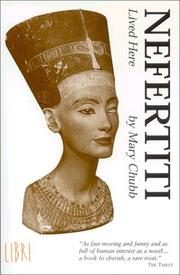
I've just finished reading Mary Chubb's (1903-2003) "Nefertiti Lived Here", and I feel compelled to write about her story. Chubb worked as an under secretary for the Egypt Exploration Society in the 1920's, and in 1930 she joined the Tell el-Amarna expedition, directed by John Devitt Stringfellow Pendlebury (1904-41). Pendlebury, though relatively young (aged 25) at the time, was also the director of the excavations at Knossos.
| John Pendlebury |
During the Second World War, Pendlebury was sent to Crete with the status of Vice-Consul, but in reality he was to organize the Greek resistance to the impending Nazi invasion which happened in 1941. Pendlebury was well trusted all over Greece, and possessed knowledge of the varying Greek dialects of the villages scattered all over the island. He organized many efficient and successful guerrilla groups, but Chubb describes that he was unable to achieve his full potential due to a lack of resources.
What happened next is harrowing. Chubb writes:
"On 21st May, 1941, the skyborne invasion of Crete, launched from the south of Greece, began. John left his office in Heraklion and, with one of his agents, set out to reach the guerrilla meeting point to the West of the town. They were cut off and surrounded by landing parachutists and John was badly wounded [by a shot from a Stuka]. He was carried to a roadside cottage, the home of another agent, whose wife and sister did what they could for him. German soldiers searched the cottage and took away his identity disc. From this the German officers knew very well who he was, and the next morning the soldiers came back with their orders. One witness told later of John's execution outside the cottage and of his proud bearing at this last scene" (P180).
Pendlebury was propped up against a wall, and shot by German soldiers in the head and chest. He was buried nearby, but was later reburied 1km outside the western gate of Heraklion in the cemetery at Souda Bay (Grave reference 10.E.13). So not only was Pendlebury one of the foremost archaeologists of his time, indeed the "first hero of modern archaeology", he died heroically trying to prevent his beloved Greece from German invasion. This is a little known story, and though it is a very sad and tragic one I would like to help make it as widely known as possible.
Saturday, 15 January 2011
Website of the Week: Hopkins in Egypt Today
For the first 'Website of the Week' of 2011, I have chosen the homepage of the Johns Hopkins expedition at the Mut Precinct at Karnak, Luxor, directed by Dr. Betsy Bryan, Alexander Badawy Professor of Egyptian Art and Archaeology at Johns Hopkins University, and Dr. Violaine Chauvet, Lecturer in Egyptology at the the University of Liverpool. The team has been working behind the sacred lake of the Mut temple over the past month, and every day they upload a diary entry to the website in order to provide visitors with up-to-the-minute information on what has been found that day, who has been working on which feature, and information on the archaeological techniques which are employed by the team on the site. The diary serves not only as a personal record of achievements during the excavation, but also as a useful tool for students of archaeology and Egyptology in the intricacies of archaeological excavation in Egypt.
New Online Dictionary of the Cumbrian Dialect
I'd like to make you all aware of a recent publication documenting the unique Cumbrian dialect, made available online by author Richard Byers, entitled 'A Comprehensive Dictionary of the Cumberland Dialect". Byers has worked on the dictionary over the last two years, adding to William Dickinson's 1859 'Glossary of the Dialect of Cumberland', and has recorded over 7000 words in his e-book, which is also available for the Kindle. Byers spoke to the Westmorland Gazette about his venture, and added, “It's essential that dialect isn't lost for future generations...It's changed through each generation – even text messaging has had an influence on the words we use in Cumbria today”.
The dictionary is £3.60 online, and makes for a very interesting read. Next time you're up in the Lakes, listen for some of the colloquialisms noted in the dictionary, such as Mayzlin – a simpleton or fool – and O’as yan, which means 'all the same'. This publication is essential for the preservation of the dialect and of terms which are no longer in use, such as those used for farming before the modernization of the industry.
Happy New Year!
Apologies for the exceptionally long hiatus over the past month or so, I hope that you all had a restful Christmas break and that you're all looking forward to a prosperous 2011.
Friday, 3 December 2010
Website of the Week #7: A History of the World in 100 Objects
For this week's "Website of the Week" I've chosen the homepage of the 'History of the World in 100 Objects' series, a BBC and British Museum project broadcast on BBC Radio 4. If you havn't heard about this project then I highly recommend a visit to this website; the whole series of programmes, grouped thematically, are accessible as podcasts which can be saved to your computer, and there is also an interactive timeline which allows the visitor to filter the '100 Objects' by e.g. location, material, size and culture.
The wide range of objects included in the series include items of personal adornment, stone tools, sculpture and architectural elements, ranging from 2,000,000BC to the present day. This useful tool is not only beneficial for members of the interested public but also acts as a quick reference for students of archaeology and related subjects. Another interesting feature of the site is the 'Featured Museum' - a focus on a local museum involved with the project - proving that objects of cultural and historical importance can also be found in smaller local museums across the country.
The website offers the opportunity for the public to add their objects to the list, and to participate in the series of related events due to take place in museums across the country. Dr. Neil MacGregor has published the companion volume with the same title, which I also highly recommend. If you'd like to learn more about World History in an interesting, engaging setting, then this is the site for you.
Subscribe to:
Posts (Atom)
Yan Tan Tethera: A rhyme derived from a Brythonic Celtic language used by shepherds to keep sheep in many parts of England and Southern Scotland.
Until the Industrial Revolution, the use of traditional number systems was common among shepherds, especially in the Dales of the Lake District.
[This Blog is best viewed in Mozilla Firefox]