Pages

Sunday, 29 May 2011

Anatomy of an Exhibition: Kendal Museum's new Egyptology Display

Although it is now quite a while after the official opening (March 31st), I have recently acquired some images of the recent re-display of Kendal Museum's ancient Egyptian collection and I thought the story behind the display might be of some interest (all photos courtesy of Morag Clement).

The Collection

As a direct result of their involvement in the current touring exhibition of objects from the excavations of John Garstang, entitled "From Egypt's Sands to Northern Hills: John Garstang's Excavations in Egypt", Kendal Museum received a sum of money from Renaissance North West to be used to improve their Egyptology display. The Museum contains over 140 Egyptian objects, most of which were excavated from Abydos, Esna, Hierakonpolis and Beni Hassan by John Garstang during the early 20th Century on behalf of the Liverpool Institute of Archaeology (now the School of Archaeology, Classics and Egyptology, University of Liverpool). The collection was also supplemented by gifts from members of the local community. 

For each of Garstang's excavations, a financing committee was set up and 50% of the objects were divided between the Liverpool Institute and the sponsors of these excavations. One of these sponsors, and also the Treasurer of the Excavation Committee, was John Rankin of Hill Top, Kendal, who donated his Egyptian collection to Kendal Museum in January 1923. Rankin’s Egyptian collection was of an exceptionally high quality, and includes objects from historically significant tombs. Several of the objects have already been published and are famous in their own right.


The two cases before the project....


....and the same two cases after the re-display

Until Summer 2010, Kendal Museum's Egyptology display was somewhat dated and it was clear that a lot could be done to improve the quality of the display, which would then directly improve the visitor experience and the knowledge of the collection. I worked with the Curator of the Museum, Morag Clement, to identify aspects of the display requiring regeneration and key themes illustrated by the collection, which were: 

- Life and Living in Ancient Egypt
- Death and the Afterlife in Ancient Egypt
- The Art of Hieroglyphs

Although space constraints meant that it was not possible to redisplay every object in Kendal's collection, the most historically significant objects and those most representative of the collection were chosen to feature in the new display. Everyone at the Museum played a part in the re-display; it really was a team effort.

View of the new display
The Re-Display

Four new information panels were designed which detailed the three main themes (detailed above), together with a series of relevant colour images used to illustrate the text. A map of Egypt and a timeline of Egyptian history were also designed, in order to put the collection in context for the visitors to the Museum. 1:1 cut-outs of the objects currently in the touring exhibition were also made for the cases, so that visitors are able to view the objects that are missing.

New object labels detailed the date, provenance and material of each object where possible, together with extended labels containing information on key aspects of ancient Egyptian life and death, for example shabti-figures, scarabs, mummification and cosmetics.

Sobekhotep Statuette
Although the cases received quite a bit of light from the nearby window, their dark lining and wooden shelves made the old display feel a bit dingy. It was decided that the cases already present should remain, but that they should be re-coated and lined with calico which would make the display much lighter, which was very effective.

The wooden shelves were replaced with glass shelves, the length of which depended on the size of the object that they would support. For example, longer shelves were chosen to display the collection of pottery, but key objects (such as the inscribed Second Intermediate Period statuette of Sobekhotep, see left) were showcased on individual shelves. Where required, perspex mounts were used both to safely display the objects in the cases and to highlight interesting features, for example a mirrored perspex mount was used to display the inscriptions on the back of scarabs.

Morag Clement placing the objects back into the newly-revamped case

Hanging the Farming Scene
A farming scene from the tomb of Sennedjem at Deir el-Medina (above) was chosen to be blown up and hung over the wall-mounted case, which illustrated both the key theme of 'Life and Living in Ancient Egypt' and formed a link with the local farming community in and around Kendal. The ceiling of the nearby corridor leading downstairs was also painted with stars to emulate the Egyptian tradition of painting the ceilings of their temples and tombs which they believed represented the heavens. 

Carol Davies painting the ceiling
A catalogue detailing the history of the collection has also been produced for visitors to consult, which will undoubtedly be extended as more information is gathered about the objects in the collection over the coming months.

This project has successfully highlighted the importance of Kendal Museum's Egyptology collection, and has significantly improved the visitor's understanding of the history of the collection and of Ancient Egypt in general. It is hoped that the display will remain relevant and up-to-date for years to come, and any feedback is gladly welcomed.

Monday, 23 May 2011

Visit to the K Shoes Heritage Centre 19.5.11


I finally found the time for a quick visit to the newly-opened K Shoes Heritage Centre, located on Parkside Road, Kendal. This £500,000 investment into the preservation of the history of the world-famous K Shoes company, over ten years in the making, was designed and created as an integral part of the newly-refurbished K Village outlet, on the site of the former K Shoes factory which was demolished in 1996.

I must admit, my only real memories of K Shoes before it closed were of playing in the grounds and visiting the shoe shop for some new school shoes. However, after hearing stories of life in the factory from my uncle Ian Postlethwaite who used to work there (following in his father's footsteps), I decided that a visit to the Heritage Centre was a must.

Archway with the bust of K Shoes founder
Robert Miller Somervell

On entering the gallery, the visitor's eyes are immediately drawn to the original stone archway which marked the entrance of the factory, together with archive images of the archway in situ. The initial space tells the story of the K Shoes founding family, the Somervells (the company was originally called Somervell Bros.), being richly illustrated with archive images and original shoes and shoe-making equipment. The exhibition then opens into a larger space which houses a large and important collection of memorabilia, tools and machinery from the factory. One of my favourite pieces is the bicycle used to collect worn shoes to be repaired, known as 'Jimmy Metcalfe's Bike'.

'Jimmy Metcalfe's Bike'
The open plan of the exhibition is highly effective, as is the use of a display of suspended perspex boxes to hold the large selection of the factory's most popular shoes. A wonderful image of the factory teeming with rows and rows of workers adorns the back wall of the exhibition, providing a good opportunity for local visitors to put names to faces; a key benefit of the project for the history of the company and the local community. Another important feature of the exhibition is the display of the archive merchandising posters and television adverts, which the company was famous for. A memorial for those workers who died in WWI and WWII forms a fitting tribute at the end of the exhibition.

One of the original metal signs from when the company was known as the Somervell Bros.
I wasn't sure what to expect from this exhibition, but I thoroughly enjoyed my visit and I would encourage both locals and visitors to the town to include the Heritage Centre on their next trip to K Village. The exhibition will never truly be complete; local historian and former employee Jonathan Somervell told the Westmorland Gazette that:

“This exhibition is more about the people who made the shoes..... We get a mixed bunch of visitors. A lot of curious people come in and a lot of Kendal people who worked at the factory. In a sense the exhibition will never be finished. We have had so much to draw on that we can’t use everything.”

Sunday, 8 May 2011

Elizabeth Peters - My new favourite author

I have recently discovered the wonderful Amelia Peabody series of books written by the New York Times bestselling author Elizabeth Peters, a graduate in Egyptology from the University of Chicago. The books are set in turn of the century Egypt, and are based on the adventures of Amelia Peabody, her husband Radcliffe Emerson (both of whom are Egyptologists/detectives) and their son, the extremely precocious Walter Peabody Emerson, otherwise known as Ramses. 

The series is most notable for the depth of Egyptological content included alongside the main crime narrative, and of course the compelling twists in the stories. The Amelia Peabody website is also worth a visit, which features the timeline of the Emerson's journeys, as well as maps from some of the books. The most recent volume, 'A River in the Sky', is based in Jerusalem and the website features a video of the author discussing the book. A complete list of the Peabody books is also available.

 I'm aware that I'm probably very slow off the mark with this recommendation, but if you find yourself in need of a good read the Amelia Peabody series will undoubtedly sate your appetite for adventure.

January 25th Graffiti on Zamalek

During my stay on Zamalek at the end of April I couldn't help but stop to admire these wonderful pieces of artwork illustrating the January 25th revolution in Egypt on Ismail Mohammed Street. The pieces have become somewhat of a model backdrop as people stop to have their photo taken. My personal favourite is the mummy saying, 'I'm Free!'


Visit to Tanis 20.4.11

During work at the Delta site of Tell el-Dab'a during April 2011, I took a short morning trip to the site of Tanis (modern San el-Hagar) in the north-eastern Nile Delta with my colleagues Dr. David Aston and Dr. Alan Clapham. On reaching the site, around 40 minutes drive from Tell el-Dab'a, I was taken aback by the sheer size of the vast archaeological mounds, which could legitimately be described as resembling the lunar landscape!

Tanis was chosen as the site for the northern capital of Egypt during the 21st Dynasty, and preserved the subterranean royal tombs of the 21st and 22nd Dynasties which contained fine burial equipment now housed in Cairo's Egyptian Museum. The site was initially excavated by Auguste Mariette and later by Flinders Petrie and Pierre Montet, and is currently being excavated by a French team. 

Many of the blocks and statues used to create this new capital city were taken from the Delta capital of Ramesses II at Pi-Ramesses (Modern Qantir) in the northeast Delta and reused by the rulers of the 21st and 22nd Dynasty, who Shaw (see below) wittily described as being "children unleashed in a box of spare Lego bricks". Temples dedicated to Amun, Horus, Mut, Khonsu and Astarte have been identified at the site, together with an outer mudbrick enclosure wall dating to the reign of Psusennes I and a sacred lake.


Reused architectural elements from Pi-Ramesses

Reused colossal statue of Ramesses II

Reused columns, now fallen


It was fantastic to visit Tanis, not least to attempt a (futile) search for the Ark of the Covenant! I do highly recommend a visit if ever you are in the area, we were alone except for a small group of French tourists and the absence of loud noise was especially memorable, at least until the noon Muezzin calls!

Dr. Garry Shaw has recently published an entertaining account of his recent visit to Pi-Ramesses and Tanis in Al-Rawi (photos by Henning Franzmeier) which is also worth a read.

Saturday, 22 January 2011

John Pendlebury: Archaeologist and War Hero

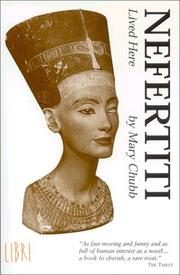
I've just finished reading Mary Chubb's (1903-2003) "Nefertiti Lived Here", and I feel compelled to write about her story. Chubb worked as an under secretary for the Egypt Exploration Society in the 1920's, and in 1930 she joined the Tell el-Amarna expedition, directed by John Devitt Stringfellow Pendlebury (1904-41). Pendlebury, though relatively young (aged 25) at the time, was also the director of the excavations at Knossos.

John Pendlebury
The narrative is compelling; through Chubb's story both archaeologists and non-archaeologists alike can understand the trials and tribulations of dig life, both good and bad: "sometimes frustrated, sometimes jubilant". The reader can relate to the members of the small team (Pendlebury and his wife Hilda, 'Hilary', 'Tommy' and 'Ralph') as they learn of their particular idiosyncrasies. I enjoyed the story immensely, and quickly reached the end. Chubb concludes with a short epilogue detailing what happened next. I won't give away the  rest of the ending for those who have not read the book, but it is the future of Pendlebury which should be particularly highlighted. 

During the Second World War, Pendlebury was sent to Crete with the status of Vice-Consul, but in reality he was to organize the Greek resistance to the impending Nazi invasion which happened in 1941. Pendlebury was well trusted all over Greece, and possessed knowledge of the varying Greek dialects of the villages scattered all over the island. He organized many efficient and successful guerrilla groups, but Chubb describes that he was unable to achieve his full potential due to a lack of resources. 

What happened next is harrowing. Chubb writes:
"On 21st May, 1941, the skyborne invasion of Crete, launched from the south of Greece, began. John left his office in Heraklion and, with one of his agents, set out to reach the guerrilla meeting point to the West of the town. They were cut off and surrounded by landing parachutists and John was badly wounded [by a shot from a Stuka]. He was carried to a roadside cottage, the home of another agent, whose wife and sister did what they could for him. German soldiers searched the cottage and took away his identity disc. From this the German officers knew very well who he was, and the next morning the soldiers came back with their orders. One witness told later of John's execution outside the cottage and of his proud bearing at this last scene" (P180).
Pendlebury was propped up against a wall, and shot by German soldiers in the head and chest. He was buried nearby, but was later reburied 1km outside the western gate of Heraklion in the cemetery at Souda Bay (Grave reference 10.E.13). So not only was Pendlebury one of the foremost archaeologists of his time, indeed the "first hero of modern archaeology", he died heroically trying to prevent his beloved Greece from German invasion. This is a little known story, and though it is a very sad and tragic one I would like to help make it as widely known as possible.

Saturday, 15 January 2011

Website of the Week: Hopkins in Egypt Today

For the first 'Website of the Week' of 2011, I have chosen the homepage of the Johns Hopkins expedition at the Mut Precinct at Karnak, Luxor, directed by Dr. Betsy Bryan, Alexander Badawy Professor of Egyptian Art and Archaeology at Johns Hopkins University, and Dr. Violaine Chauvet, Lecturer in Egyptology at the the University of Liverpool.

The team has been working behind the sacred lake of the Mut temple over the past month, and every day they upload a diary entry to the website in order to provide visitors with up-to-the-minute information on what has been found that day, who has been working on which feature, and information on the archaeological techniques which are employed by the team on the site. The diary serves not only as a personal record of achievements during the excavation, but also as a useful tool for students of archaeology and Egyptology in the intricacies of archaeological excavation in Egypt.
Yan Tan Tethera: A rhyme derived from a Brythonic Celtic language used by shepherds to keep sheep in many parts of England and Southern Scotland.

Until the Industrial Revolution, the use of traditional number systems was common among shepherds, especially in the Dales of the Lake District.


[This Blog is best viewed in Mozilla Firefox]

Total Pageviews